 October 05, 2026 - BY Admin
Smart technology refers to devices and systems that can collect information, connect to networks, process data, and perform tasks intelligently. Smartphones, smart appliances, wearable devices, connected vehicles, and smart business systems are common examples.
Smart technology is becoming part of everyday routines. People use smartphones to communicate, smart watches to monitor activities, smart speakers to control devices, and connected applications to manage schedules, shopping, entertainment, and other activities.
Artificial intelligence plays an important role in modern smart technology. AI can analyze information, recognize patterns, provide recommendations, and automate certain tasks. These capabilities allow smart systems to respond more effectively to user needs.
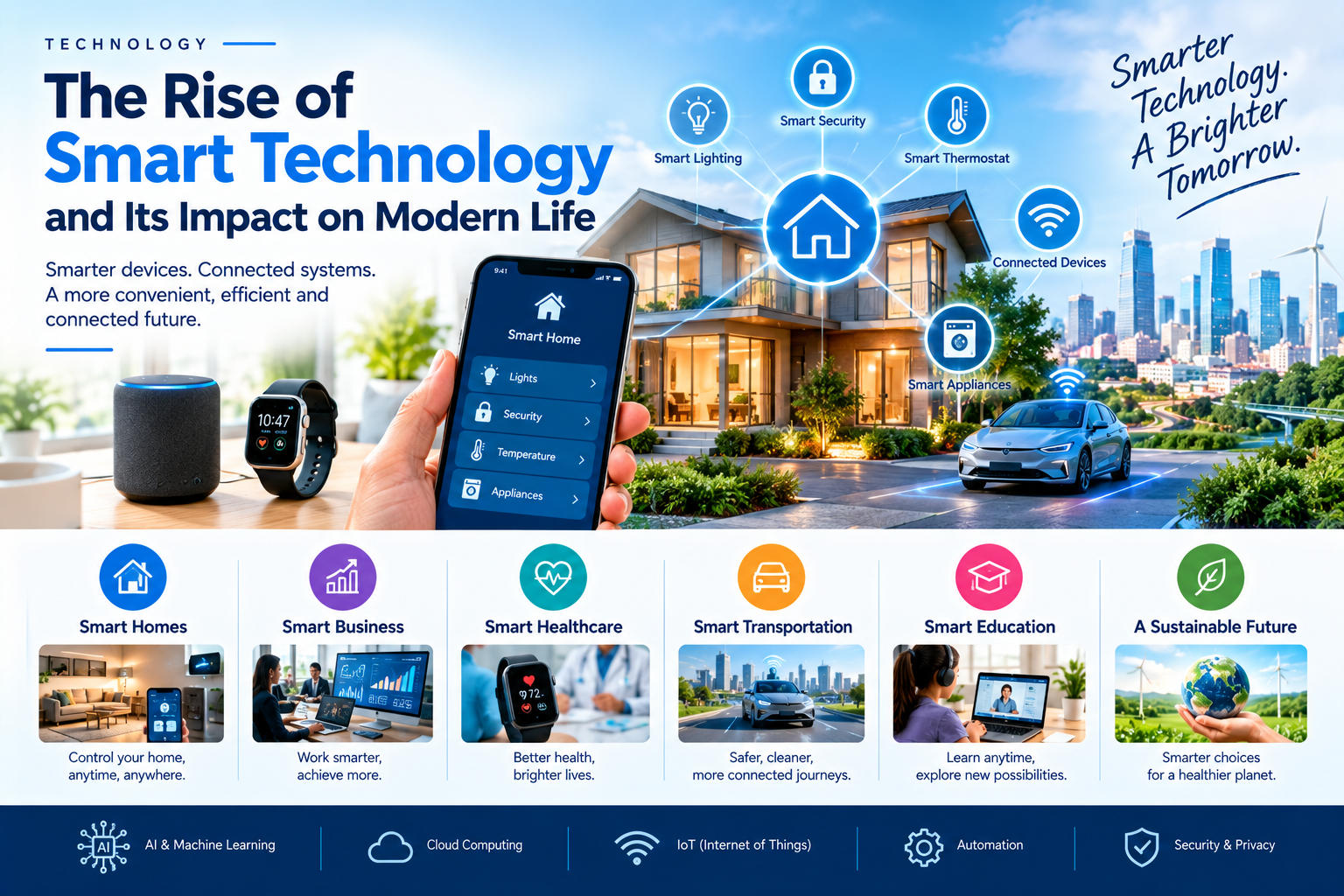
Smart home technology allows connected devices to work together. Smart lighting, security cameras, thermostats, door locks, and appliances can often be controlled through mobile applications or voice commands. These technologies can improve convenience and help users manage their homes more efficiently.
Businesses are increasingly using intelligent systems to improve operations. Automation, data analytics, customer-management platforms, connected devices, and AI-powered tools can help organizations improve productivity, understand customers, and make better decisions.
Technology is also supporting healthcare services. Wearable devices can help users track certain health-related measurements, while digital systems can assist healthcare professionals with information management, communication, and patient services.
Connected technology is transforming transportation. Navigation applications, connected vehicles, traffic-management systems, electric vehicles, and driver-assistance technologies can help improve transportation efficiency and convenience.
Digital learning platforms and intelligent educational tools can provide students with flexible access to learning resources. Technology can support personalized learning, online collaboration, digital assignments, and interactive educational experiences.
The growing number of connected devices also creates security and privacy responsibilities. Users should keep devices updated, use strong passwords, enable multi-factor authentication where available, review permissions, and avoid connecting sensitive devices to unsecured networks.
Smart technology can save time, automate repetitive activities, improve accessibility, support better decision-making, and connect people and devices. When implemented appropriately, it can improve both personal experiences and business processes.
Smart technology will continue to evolve as artificial intelligence, cloud computing, connectivity, automation, and advanced hardware develop. Future systems may become more personalized and capable of working together across homes, workplaces, transportation, healthcare, and other environments.
Smart technology is becoming an important part of modern society. From connected homes and businesses to intelligent transportation and digital education, smart systems are creating new possibilities. Using these technologies responsibly while protecting privacy and security will be essential as the connected world continues to grow.