 October 26, 2026 - BY Admin
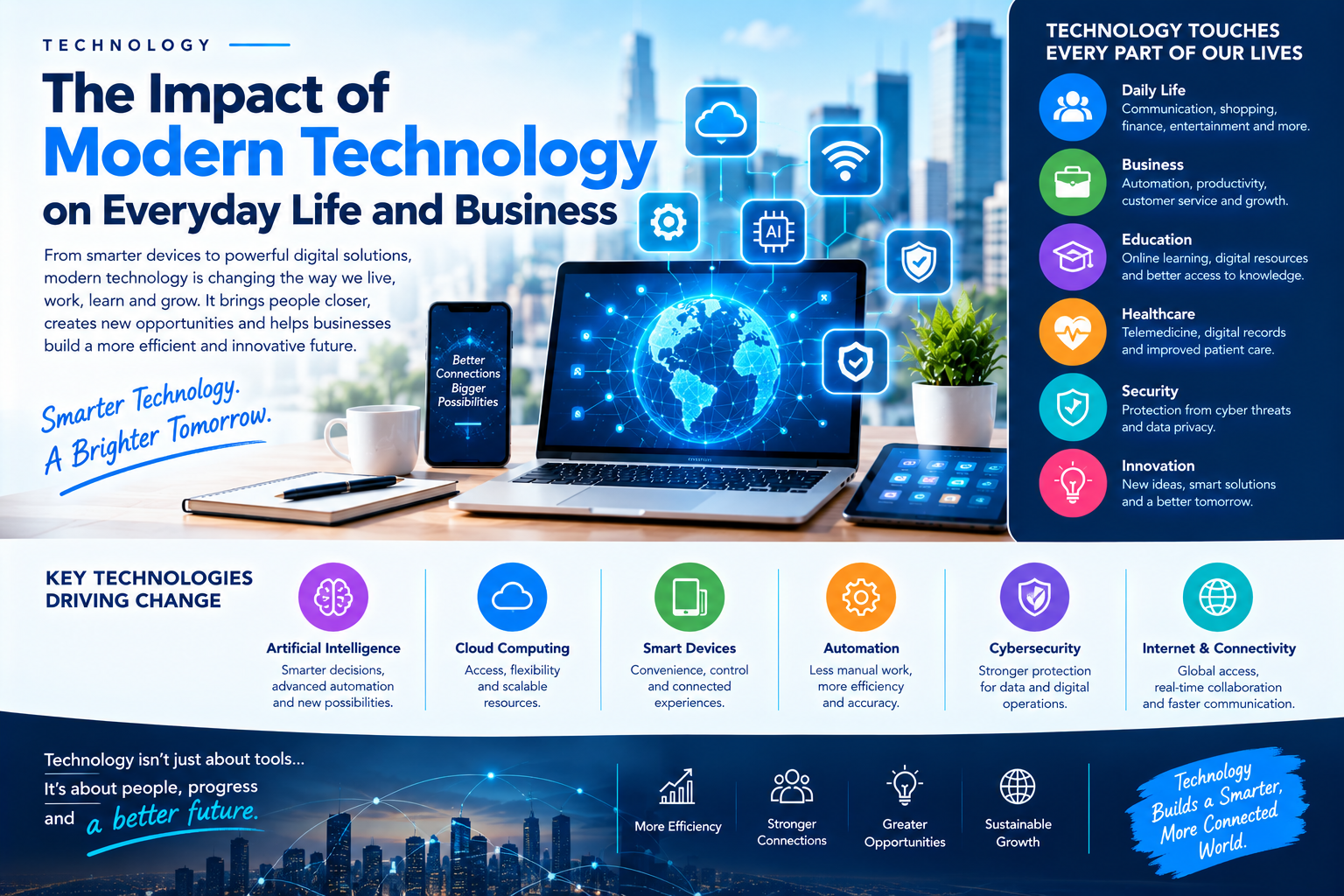
Modern technology refers to the tools, systems, devices, and digital solutions developed to make tasks easier, faster, and more efficient. It includes computers, smartphones, software applications, cloud platforms, artificial intelligence, robotics, and connected devices.
Technology continues to evolve as people develop new ways to solve problems, share information, and improve everyday experiences.
Technology has become an essential part of modern living. People use digital devices and applications to communicate, manage finances, shop online, access entertainment, and organize their daily schedules.
Online services make information more accessible and help people complete many tasks without visiting physical locations. Navigation applications, digital payments, online booking systems, and smart home devices are examples of how technology simplifies everyday activities.
Businesses use technology to improve productivity, manage operations, serve customers, and make informed decisions. Digital tools can reduce repetitive work and help teams coordinate tasks more effectively.
Common business applications include accounting software, customer relationship management systems, project management platforms, and digital communication tools.
By selecting suitable technologies, businesses can improve efficiency, respond to customer needs, and adapt to changing market conditions.
Artificial intelligence (AI) enables computer systems to perform tasks that typically require human intelligence, such as understanding language, identifying patterns, and generating content.
Automation helps complete repetitive tasks with less manual effort. Businesses may use these technologies for customer support, document processing, quality checks, data analysis, and workflow management.
However, AI-generated results should be reviewed when accuracy, fairness, privacy, or important business decisions are involved. Responsible implementation helps organizations benefit from these tools while managing potential risks.
Cloud computing allows people and businesses to access computing resources, applications, and storage through the internet. It supports remote work, online collaboration, and flexible access to digital information.
Employees can work on shared documents, manage projects, and communicate across locations without depending entirely on physical office infrastructure.
Cloud services can also help organizations scale their technology resources as their needs change, although proper security, cost management, and backup planning remain important.
Technology has expanded access to learning through online courses, digital libraries, virtual classrooms, and educational applications.
Students can explore new subjects, attend remote classes, and access learning materials at different times and locations. Teachers can use digital tools to explain concepts, assess progress, and provide learning resources.
Combining technology with effective teaching methods can create more flexible learning experiences and help students develop digital skills for the future.
As more activities move online, protecting digital information has become increasingly important. Cyber threats such as phishing, malware, identity theft, and unauthorized account access can affect individuals and organizations.
People can improve their digital security by using strong, unique passwords, enabling multifactor authentication, updating software, and avoiding suspicious links.
Businesses should also establish access controls, protect sensitive data, train employees, and maintain reliable backups. Responsible data handling helps preserve privacy and build trust.
Technology supports healthcare through digital medical records, remote consultations, diagnostic equipment, and health information systems.
Telemedicine can help patients communicate with healthcare professionals without always needing to travel. Digital systems can also assist healthcare teams in organizing information and coordinating services.
These technologies should complement appropriate professional care, with careful attention to data privacy, accuracy, and patient safety.
Technological innovation offers several important benefits:
Greater efficiency: Digital tools can simplify tasks and reduce manual effort.
Improved communication: Online platforms connect people across distances.
Better access to information: Digital resources support learning and research.
Enhanced decision-making: Data analysis can reveal useful patterns and trends.
Business growth: Technology can help organizations reach new customers and markets.
New opportunities: Emerging tools create possibilities for new products, services, and careers.
The benefits depend on choosing suitable solutions and using them effectively.
Although technology provides many advantages, it also introduces challenges that require attention.
Digital systems may expose users to privacy risks, cyberattacks, misinformation, and excessive screen time. Automation can change job requirements, making continuous learning and skills development increasingly important.
Technology can also create accessibility gaps when people lack reliable internet access, suitable devices, or digital skills.
Addressing these challenges requires responsible design, digital education, appropriate security measures, and thoughtful technology use.
The future of technology will likely involve continued development in artificial intelligence, robotics, renewable energy, connected devices, and advanced computing.
These innovations may improve transportation, healthcare, education, manufacturing, and environmental monitoring. Businesses may also use more intelligent systems to automate workflows and provide personalized services.
At the same time, organizations and individuals will need to focus on cybersecurity, privacy, responsible AI, and the ethical use of emerging technologies.
Modern technology continues to shape everyday life, business operations, education, healthcare, and communication. It creates opportunities to work more efficiently, access information, and develop innovative solutions to existing problems.
To make the most of these advancements, individuals and organizations should embrace useful digital tools while protecting privacy, maintaining security, and developing new skills. Responsible technology adoption can help create a more connected, productive, and innovative future.