 August 24, 2026 - BY Admin
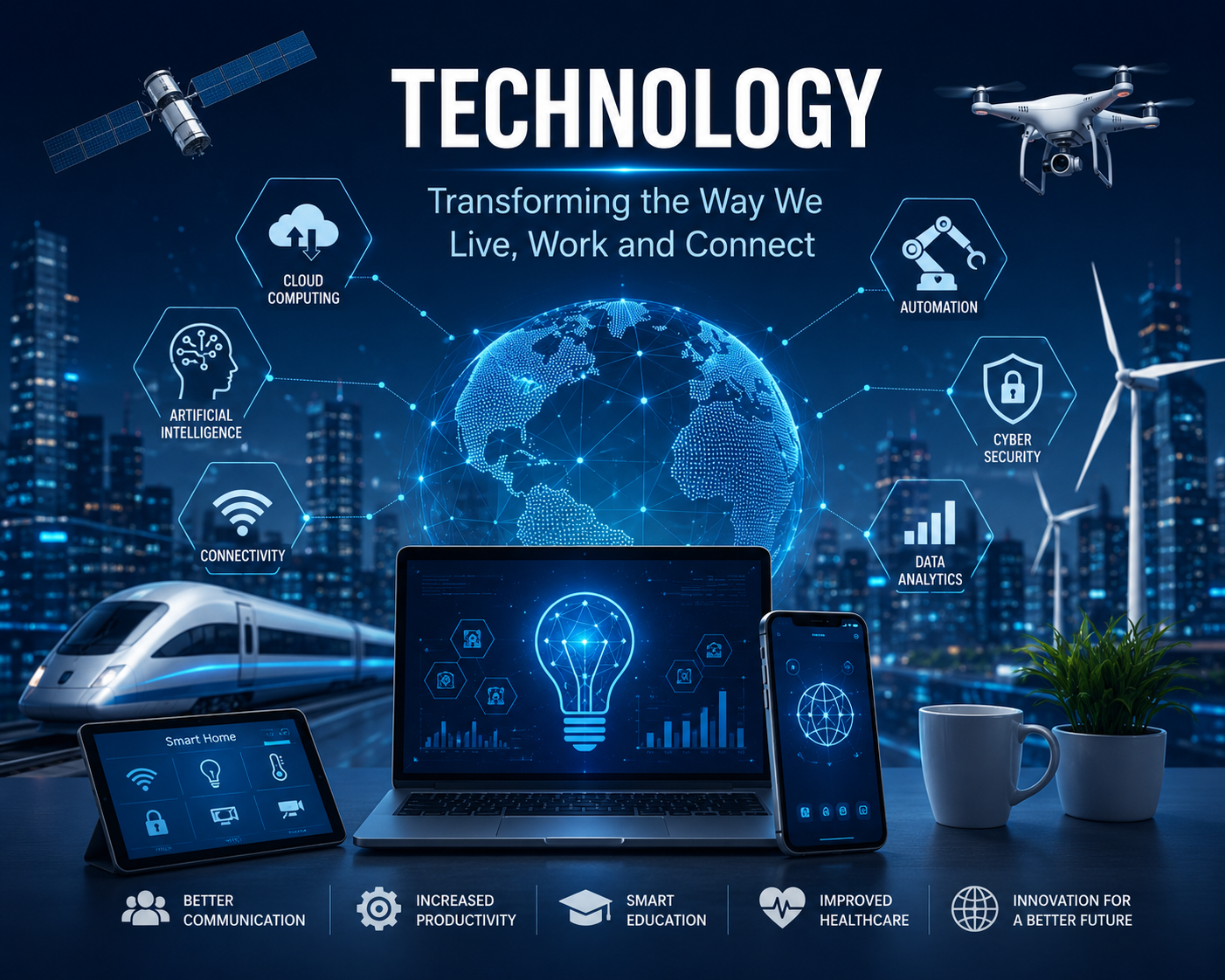
Technology has transformed nearly every aspect of modern society. The way people communicate, conduct business, learn new skills, access information, and manage everyday activities has changed significantly because of technological innovation. Today, computers, smartphones, cloud platforms, artificial intelligence, connected devices, and digital services are deeply integrated into both personal and professional life.
Technology refers to the tools, systems, techniques, and processes developed to solve problems and make tasks easier, faster, and more efficient. While technology has existed for centuries, the rapid development of digital technologies has created unprecedented opportunities for individuals, businesses, and organizations.
Technology has continuously evolved throughout human history. Early inventions such as the wheel, printing press, and mechanical tools changed how people traveled, communicated, and worked. The Industrial Revolution introduced machines and large-scale manufacturing, while the invention of computers and the internet created the foundation for today's digital world.
The rise of smartphones and high-speed internet has made digital services accessible from almost anywhere. People can communicate instantly, access information within seconds, work remotely, and connect with businesses and services through digital platforms.
Technology plays an important role in everyday activities. Smartphones allow people to communicate, navigate, make payments, access entertainment, and manage personal information from a single device.
Smart home technologies can automate lighting, security systems, appliances, and temperature control. Online banking and digital payment platforms have made financial transactions faster and more convenient. Streaming platforms, online shopping, and digital communication tools have also changed how people consume entertainment and interact with businesses.
Businesses rely heavily on technology to improve productivity, communication, customer service, and decision-making. Cloud computing allows organizations to store and access data and applications without depending entirely on local infrastructure.
Business applications can automate repetitive tasks, manage customer relationships, track finances, analyze data, and coordinate teams. Collaboration platforms also allow employees to work together effectively across different locations.
Technology can help businesses reduce operational costs, improve efficiency, and provide better services to customers.
Artificial intelligence is one of the most important technological developments of recent years. AI systems can analyze large amounts of information, recognize patterns, generate content, assist with decision-making, and automate certain tasks.
Automation can reduce the amount of manual work required for repetitive processes. Businesses can use automation for customer support, data processing, software testing, reporting, manufacturing, and many other activities.
However, the increasing use of AI and automation also creates challenges. Organizations need to consider accuracy, privacy, security, transparency, and the impact of automation on jobs and skills.
Technology has significantly changed education. Students can access online courses, digital libraries, educational applications, tutorials, and virtual classrooms from almost anywhere.
Teachers can use interactive tools, digital presentations, online assessments, and learning management systems to improve the learning experience. Remote learning technologies have also made education more accessible to people who may not be able to attend traditional classrooms.
Technology provides numerous benefits when used responsibly.
Despite its advantages, technology also introduces several challenges. Cybersecurity threats can expose sensitive information and disrupt digital services. Privacy concerns have increased as organizations collect and process large amounts of user data.
Excessive dependence on technology can also create problems. People may become overly dependent on digital devices, while organizations may face serious disruptions when critical systems fail.
The digital divide is another concern. Not everyone has equal access to high-speed internet, modern devices, or digital education. Addressing this gap is important to ensure that technological progress benefits a wider part of society.
Technology will continue to evolve rapidly. Artificial intelligence, robotics, cloud computing, Internet of Things devices, advanced cybersecurity, and other emerging technologies are expected to influence how people live and work.
Future technologies may create new industries, improve existing services, and provide solutions to complex problems. At the same time, society will need to address ethical, security, privacy, environmental, and economic challenges associated with technological development.
Organizations and individuals can prepare for the future by developing digital skills, adopting technology responsibly, protecting sensitive information, and continuously learning about emerging innovations.
Technology has become a fundamental part of modern society. It provides powerful tools for communication, education, business, healthcare, entertainment, and everyday activities. When used responsibly, technology can improve efficiency, create opportunities, and help solve important problems.
As technological innovation continues, individuals and organizations must balance the benefits of new technologies with responsible use, security, privacy, and ethical considerations. Understanding technology and adapting to its continuous evolution will be essential for building a more connected and productive future.