 June 23, 2026 - BY Admin
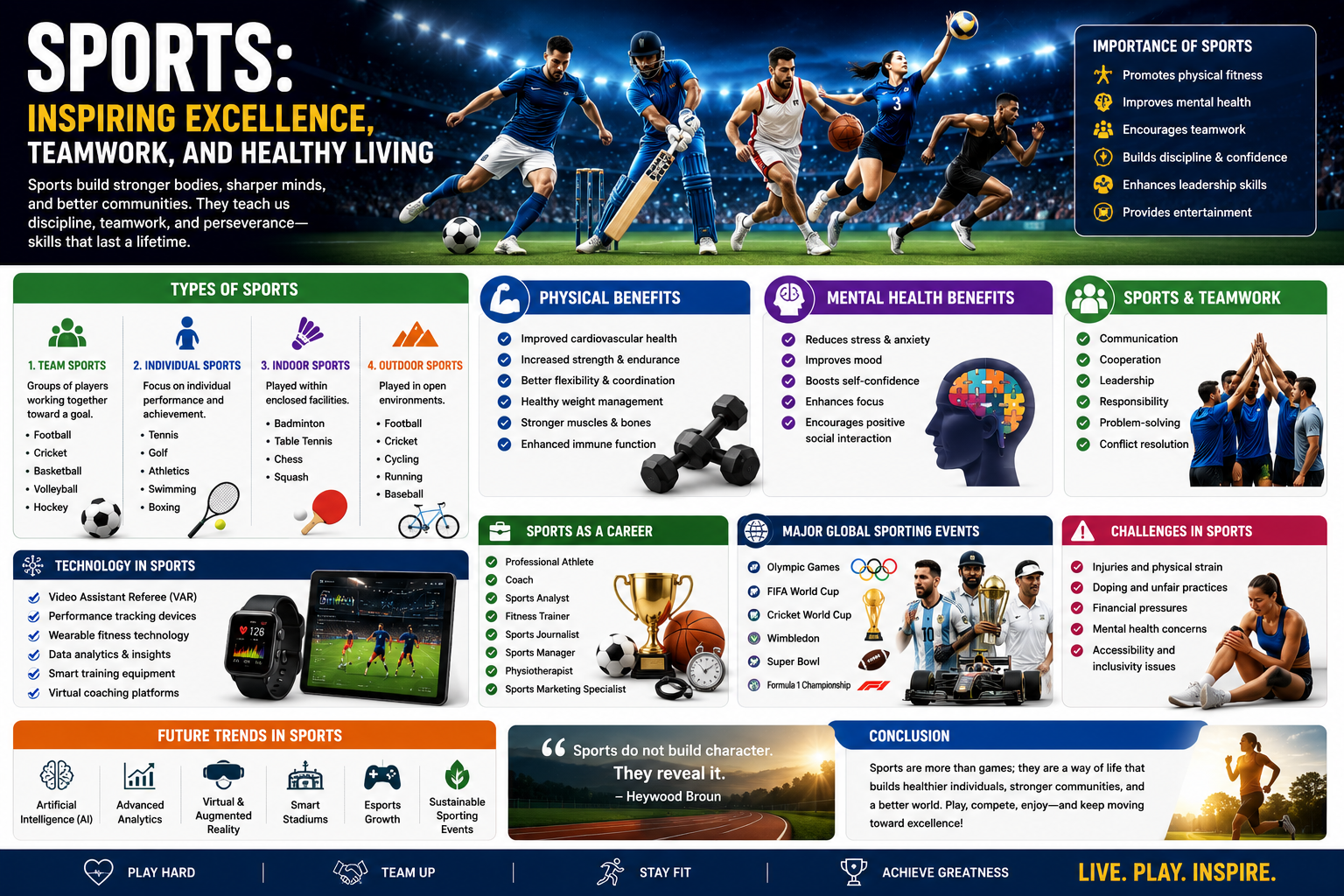
Sports have been an essential part of human culture for centuries. They provide entertainment, encourage healthy lifestyles, and foster teamwork and discipline. From local competitions to international tournaments, sports unite people across different cultures and backgrounds while inspiring athletes to achieve excellence.
Sports are physical activities or games that involve skill, competition, and organized participation. They can be played individually or in teams and are often governed by specific rules and regulations.
Sports contribute significantly to individual and community development by:
Team sports involve groups of players working together toward a common goal.
Examples include:
These sports focus on individual performance and achievement.
Examples include:
Indoor sports are played within enclosed facilities.
Examples include:
Outdoor sports take place in open environments.
Examples include:
Regular participation in sports offers numerous physical benefits:
Sports positively impact mental well-being by:
Team sports teach valuable life skills such as:
These skills are beneficial both on and off the field.
Technology has transformed modern sports through:
These innovations help improve athlete performance and decision-making.
Sports provide various professional opportunities, including:
Some of the world's most popular sporting events include:
These events attract millions of fans and showcase elite athletic talent.
Despite its benefits, sports face challenges such as:
Addressing these challenges is important for maintaining fairness and athlete well-being.
The future of sports is being shaped by:
Sports are much more than competition—they are a powerful tool for promoting health, developing life skills, and bringing communities together. Whether played professionally or recreationally, sports inspire dedication, teamwork, and personal growth while creating memorable experiences for athletes and fans alike.