 August 03, 2026 - BY Admin
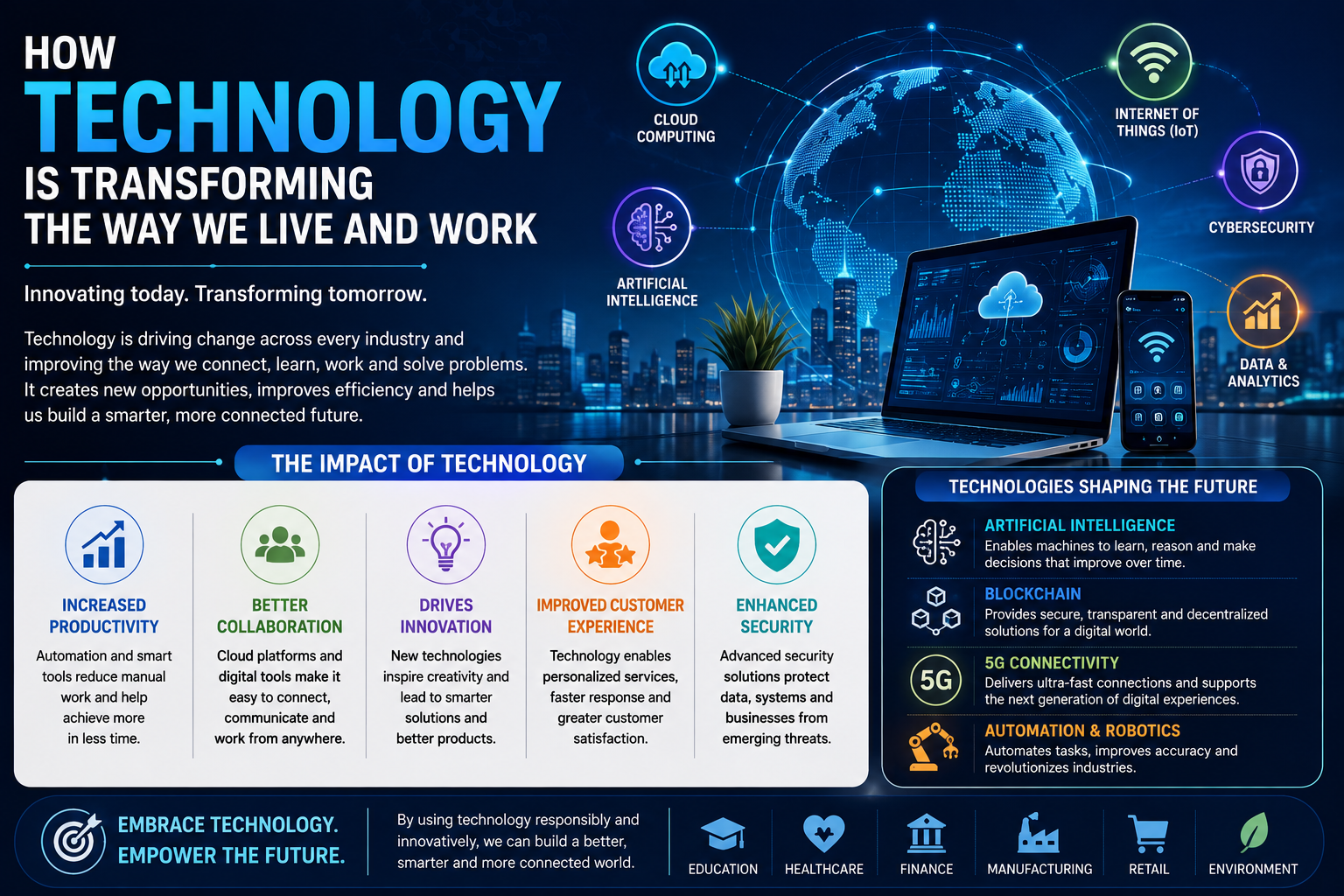
Technology has become an essential part of everyday life, influencing how people communicate, learn, work, and solve problems. From smartphones and cloud computing to artificial intelligence and the Internet of Things (IoT), technological advancements have made information more accessible and processes more efficient. Businesses and individuals now rely on digital solutions to stay connected, streamline operations, and adapt to an increasingly fast-paced world.
One of the greatest benefits of technology is its ability to improve productivity. Automation tools reduce repetitive tasks, cloud-based platforms enable remote collaboration, and data analytics help organizations make informed decisions. These innovations allow businesses to save time, reduce costs, and focus on strategic growth while providing employees with flexible and efficient ways to work.
Technology has also transformed industries such as healthcare, education, finance, and manufacturing. In healthcare, digital records and AI-powered diagnostic tools improve patient care and accuracy. Educational institutions use online learning platforms to make education accessible to students worldwide. Financial organizations leverage advanced security technologies to protect transactions, while manufacturers adopt smart automation to increase efficiency and product quality.
As technology continues to evolve, cybersecurity and responsible innovation have become increasingly important. Protecting sensitive data, ensuring privacy, and developing ethical technology solutions are essential for maintaining trust in the digital world. Organizations must continuously update their security measures and embrace best practices to safeguard their systems against emerging cyber threats.
Looking ahead, emerging technologies such as artificial intelligence, machine learning, blockchain, quantum computing, and 5G connectivity will continue to shape the future. Businesses that embrace innovation and invest in modern technology will be better positioned to adapt to changing market demands and remain competitive. By leveraging technology responsibly, organizations and individuals can unlock new opportunities, improve efficiency, and build a smarter, more connected future.