 October 12, 2026 - BY Admin
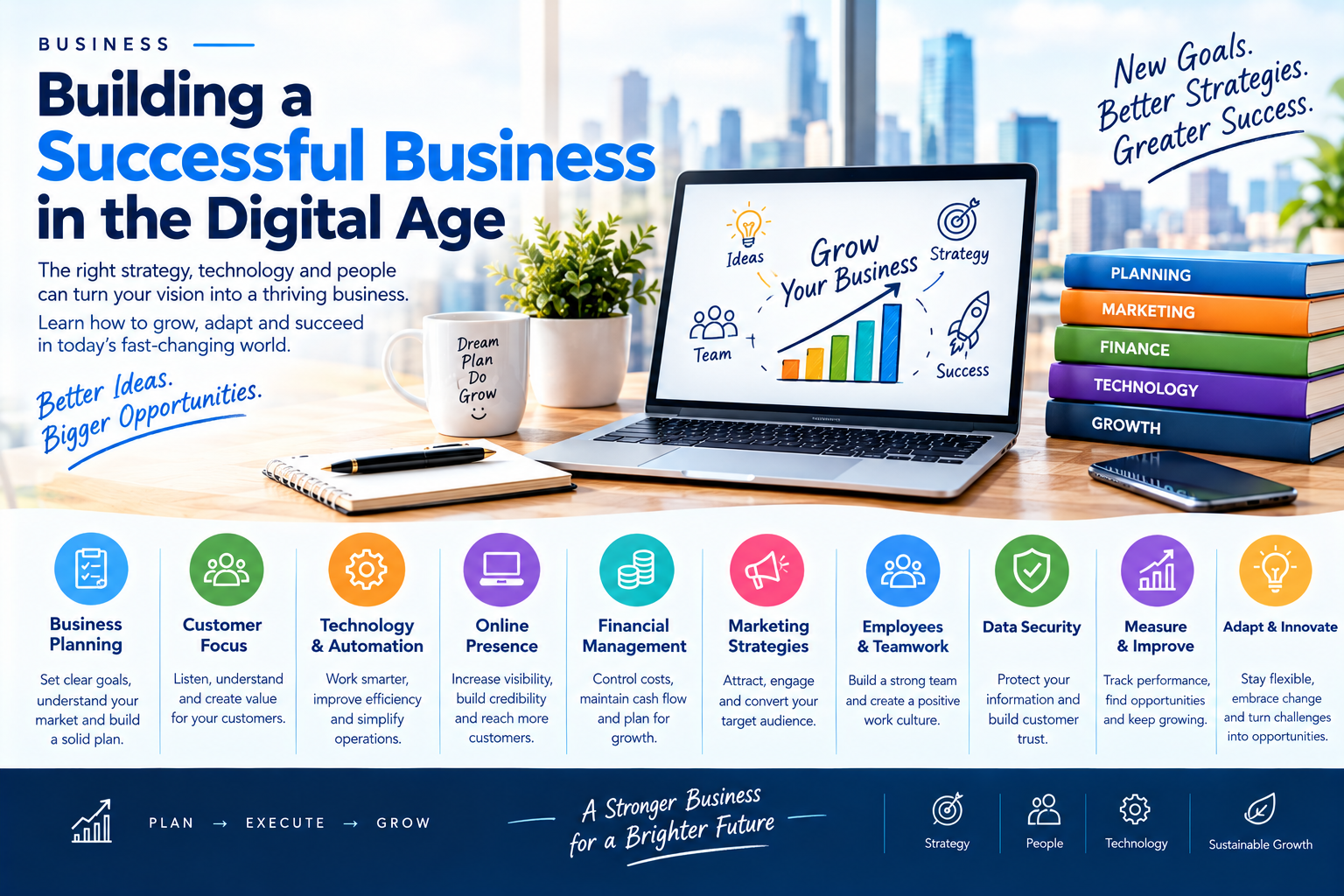
A successful business provides valuable products or services, meets customer needs, manages resources effectively, and generates sustainable revenue. Success is not measured by profit alone; customer satisfaction, employee development, brand reputation, and long-term stability are also important.
Every business needs a clear purpose, realistic goals, and a strategy that supports continuous improvement.
A business plan provides direction and helps entrepreneurs understand how to turn an idea into a sustainable operation. It outlines the target market, products or services, financial requirements, marketing approach, and growth objectives.
A strong business plan should include:
Regularly reviewing the plan helps businesses respond to new opportunities and challenges.
Customers are central to every successful business. Understanding their expectations helps organizations develop relevant products, improve services, and build lasting relationships.
Businesses can learn about customers through surveys, reviews, feedback forms, market research, and direct communication.
Listening to customer feedback also helps identify service problems and areas for improvement. When customers feel valued, they are more likely to return and recommend the business to others.
Technology helps businesses simplify everyday tasks, improve communication, and manage information more efficiently.
Examples include customer relationship management systems, accounting software, project management tools, cloud storage, and business communication platforms.
Digital tools can reduce repetitive work, support collaboration between teams, and provide better visibility into business performance. Choosing technology that matches actual business needs can improve productivity without creating unnecessary complexity.
An online presence helps businesses introduce their products and services to potential customers. A professional website, useful content, and active digital channels can improve visibility and credibility.
Businesses can strengthen their online presence by:
Consistent communication and a professional digital experience help customers understand what a business offers and why it is valuable.
Good financial management helps businesses control expenses, maintain cash flow, and make informed decisions. Even a business with strong sales can face difficulties if payments are delayed or costs are poorly managed.
Business owners should track income and expenses, prepare budgets, monitor outstanding payments, and review financial performance regularly.
Planning for unexpected costs and maintaining an appropriate cash reserve can also help businesses manage uncertain periods.
Marketing helps businesses reach their target audience, communicate their value, and attract potential customers. The right approach depends on the industry, customer behavior, budget, and business objectives.
Useful marketing methods include content marketing, email campaigns, search engine optimization, social media, partnerships, and referral programs.
Instead of focusing only on the number of views or followers, businesses should evaluate meaningful results such as qualified leads, customer conversions, repeat purchases, and return on marketing investment.
Employees contribute to business success through their knowledge, skills, creativity, and commitment. A supportive work environment encourages collaboration and helps teams solve problems more effectively.
Businesses can strengthen their teams by providing clear responsibilities, useful training, constructive feedback, and opportunities for professional development.
Good communication between management and employees also reduces confusion and helps everyone work toward shared goals.
Businesses increasingly depend on digital information, including customer records, financial documents, employee details, and operational data. Protecting this information is essential for maintaining trust and avoiding unnecessary disruption.
Organizations should use strong passwords, multifactor authentication, regular software updates, secure access permissions, reliable backups, and employee cybersecurity training.
A clear security policy and an incident response plan can help businesses prepare for potential threats and respond more effectively when problems occur.
Businesses need reliable performance indicators to understand whether their strategies are working. Reviewing measurable results helps managers identify strengths, recognize problems, and make better decisions.
Common business performance indicators include:
The most useful indicators are those connected directly to the organization's goals. Reviewing them regularly helps businesses make adjustments based on evidence rather than assumptions.
Customer expectations, technology, competition, and economic conditions can change quickly. Businesses that monitor these changes are better positioned to identify new opportunities and respond to challenges.
Innovation does not always require developing an entirely new product. It can also involve improving customer service, simplifying internal processes, introducing flexible payment options, or making existing services easier to access.
A willingness to learn, experiment, and improve helps businesses remain relevant over time.
Building a successful business requires a combination of planning, customer understanding, financial discipline, effective marketing, skilled employees, and responsible technology use. Businesses that measure their progress and adapt to changing conditions can create stronger customer relationships and improve their long-term prospects.
Success is an ongoing process of learning, solving problems, and delivering value. With clear goals and consistent effort, businesses can build a strong foundation for sustainable growth.