 August 17, 2026 - BY Admin
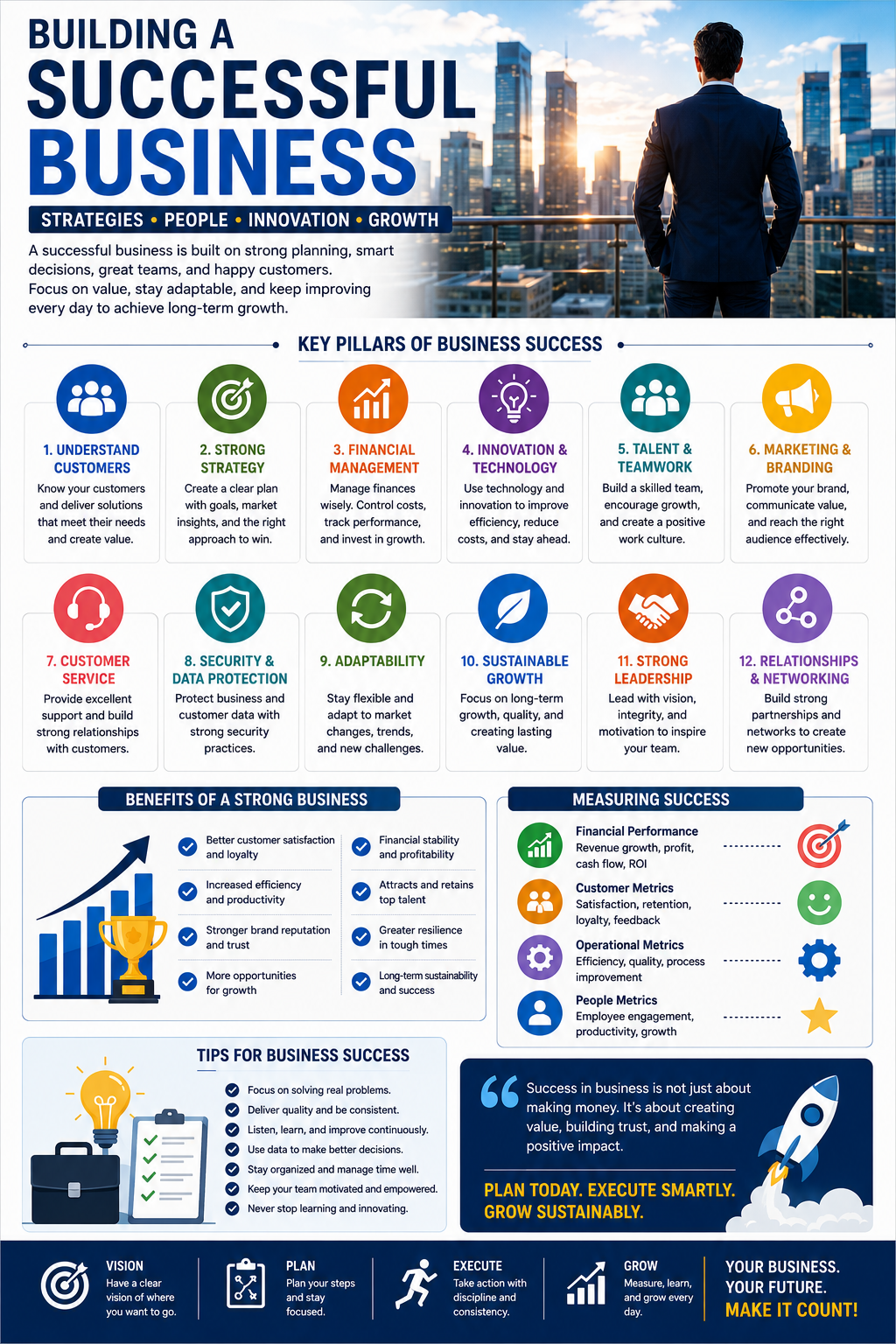
Building a successful business requires more than offering a good product or service. Companies need a clear vision, strong planning, effective management, and an understanding of their customers. In today's competitive environment, businesses must continuously improve their strategies and adapt to changing market conditions.
Customers are at the center of every successful business. Understanding their expectations, challenges, preferences, and feedback helps companies develop better products and services. Businesses can use surveys, reviews, customer support interactions, and market research to understand what their customers value most.
A clear business strategy provides direction and helps organizations make informed decisions. Businesses should establish realistic goals, identify their target market, understand competitors, and determine how they will create value. Regularly reviewing the strategy allows companies to respond to new opportunities and market changes.
Financial management is essential for business stability and growth. Companies should monitor revenue, expenses, cash flow, budgets, and investments. Careful financial planning helps businesses control unnecessary costs while ensuring that enough resources are available for operations and future expansion.
Technology has become an important part of modern business operations. Cloud computing, artificial intelligence, automation, data analytics, and digital communication tools can improve productivity and efficiency. Businesses that embrace useful technologies can streamline processes, improve customer experiences, and respond more quickly to changing demands.
Employees play an important role in business success. Hiring skilled people, providing training, encouraging collaboration, and recognizing achievements can help create a motivated workforce. A positive workplace culture can improve productivity while encouraging employees to contribute ideas and solve problems.
Marketing helps businesses communicate their value and reach potential customers. Websites, social media, email campaigns, search engine optimization, online advertising, and useful content can help companies build visibility. A consistent brand message can also improve recognition and trust among customers.
Customer service can strongly influence a company's reputation. Businesses should respond quickly to questions, resolve problems professionally, and make it easy for customers to receive assistance. Consistent service can encourage customer loyalty and generate positive recommendations.
Businesses increasingly depend on digital systems, making cybersecurity an important priority. Strong passwords, multi-factor authentication, regular software updates, employee awareness, access controls, and reliable backups can help protect business information from digital threats.
Markets constantly evolve because of new technologies, customer preferences, economic conditions, and competition. Businesses that monitor trends and remain flexible can identify new opportunities and respond to challenges more effectively. Continuous learning and improvement are essential for long-term success.
Rapid expansion is not always the best measure of success. Sustainable growth focuses on maintaining financial stability, delivering consistent quality, supporting employees, and building long-term customer relationships. Businesses should grow at a pace that allows them to maintain strong operations and service quality.
Effective leadership provides direction and motivates teams to work toward shared goals. Good leaders communicate clearly, make informed decisions, listen to employees, and encourage innovation. Strong leadership can help organizations navigate challenges and maintain focus during periods of change.
Partnerships and professional networks can create valuable opportunities. Businesses can collaborate with suppliers, industry professionals, technology providers, and other organizations to share knowledge, reach new markets, and develop new solutions.
Businesses should regularly evaluate their performance using meaningful metrics. Revenue, customer retention, conversion rates, productivity, expenses, and customer satisfaction can provide useful insights. Tracking performance helps companies identify strengths, recognize problems, and make better decisions.
Successful businesses are built through continuous effort, thoughtful planning, customer understanding, innovation, financial discipline, and strong leadership. By using technology responsibly, developing skilled teams, protecting important data, and adapting to market changes, businesses can create a strong foundation for sustainable growth and long-term success.